Beer de Vreeze

Beer de Vreeze. I build AI agents that finish real work.

Junior AI Engineer at ASAPCLOUD, working on an AI harness, MCP servers, agent skills and automations, and helping companies bring AI into their workflows.

Email beer@vreeze.com

Demo run

> /showhow how to export a report

Work

showhow

An agent skill that turns a codebase into a narrated how-to or what's-new video, straight from the code.

I built showhow because nobody reads documentation. You type /showhow how to export a report, and the agent reads the code, docs and git history, writes a script and storyboard, rebuilds the real UI, and renders an MP4 with voice-over, captions, music and sound effects.

No screen recording, no live URL, no video editor. It runs in Claude Code, Codex, OpenCode and any agent that loads SKILL.md skills.

ASAPCLOUD uses it for the how-to and update videos of its AI harness. The video here was made by showhow itself.

Kind
Open-source agent skill
In use
ASAPCLOUD, how-to and update videos
Built on
Hyperframes, Python
Install
npx skills add Beer-de-Vreeze/showhow
0:00
How showhow works, made with showhow.

One run writes

<video>.mp4
the rendered video
captions.srt
captions that match the narration word for word
chapters.txt
chapter timestamps for YouTube or an LMS
showhow.md
a written companion with the same steps
composition/
the Hyperframes project, editable and re-renderable
bunq Voice

Voice-first banking for people who are blind or partially sighted. Built in 24 hours at bunq Hackathon 7.0.

The hackathon challenge was to build something inside bunq with multimodal AI. We built it for people who are blind or partially sighted: many of them struggle to manage their money on their own, and bunq's security blocked screen readers, which shut them out even further.

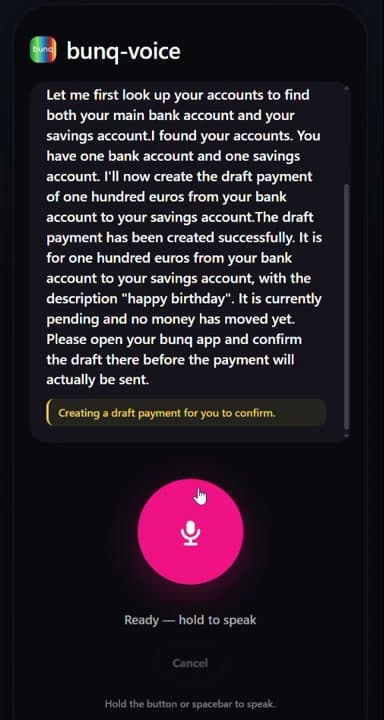
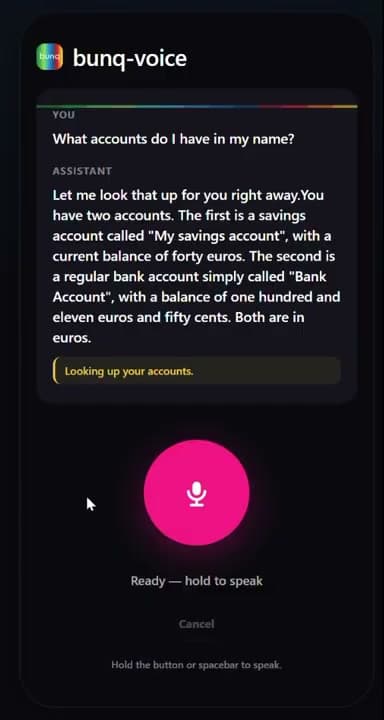
With bunq Voice you talk to your account: check balances, review transactions and set up payments, and it speaks the answers back.

The model never moves money. Every payment it proposes becomes a pending draft that still needs biometric approval in the bunq app, so accessibility does not cost security.

Speech-to-text, Claude's reasoning and text-to-speech run concurrently, so the next sentence is already on its way while the current one plays. I worked on the MCP server and the voice pipeline, with Giuseppe Dotto, Mink Quispel and Joshua Ross.

Kind
Hackathon team project, 24 hours, multimodal AI challenge
My part
MCP server, voice pipeline
Stack
Python, FastMCP, Claude Sonnet, xAI Grok, TypeScript, React
Safety
AI proposes, a human approves
0:00
bunq Voice demo from the hackathon: asking about accounts, then drafting a payment by voice.

MCP server exposes

accounts
which accounts are in your name
balances
what is in each one
transactions
recent history, read aloud
find_counterparty
a spoken name resolved to an IBAN
drafts
payments that wait for biometric approval
bunq Voice answering which accounts the user has: two accounts with their balances, read out loud
Which accounts do I have? It looks them up and reads the balances back.
bunq Voice confirming a pending draft payment of 100 euros that still needs approval in the bunq app
A payment by voice stays a draft until you approve it in bunq.

Sable

A wardrobe app with its own AI stylist and an MCP server, so agents can work with it as well.

I built Sable because I needed one place for everything I wanted to get, and to figure out where I wanted to go with fashion. Then I rebuilt it from the ground up so anyone can make an account: photograph your clothes, save looks, log what you wear and plan what to buy. It installs on your phone and keeps working offline.

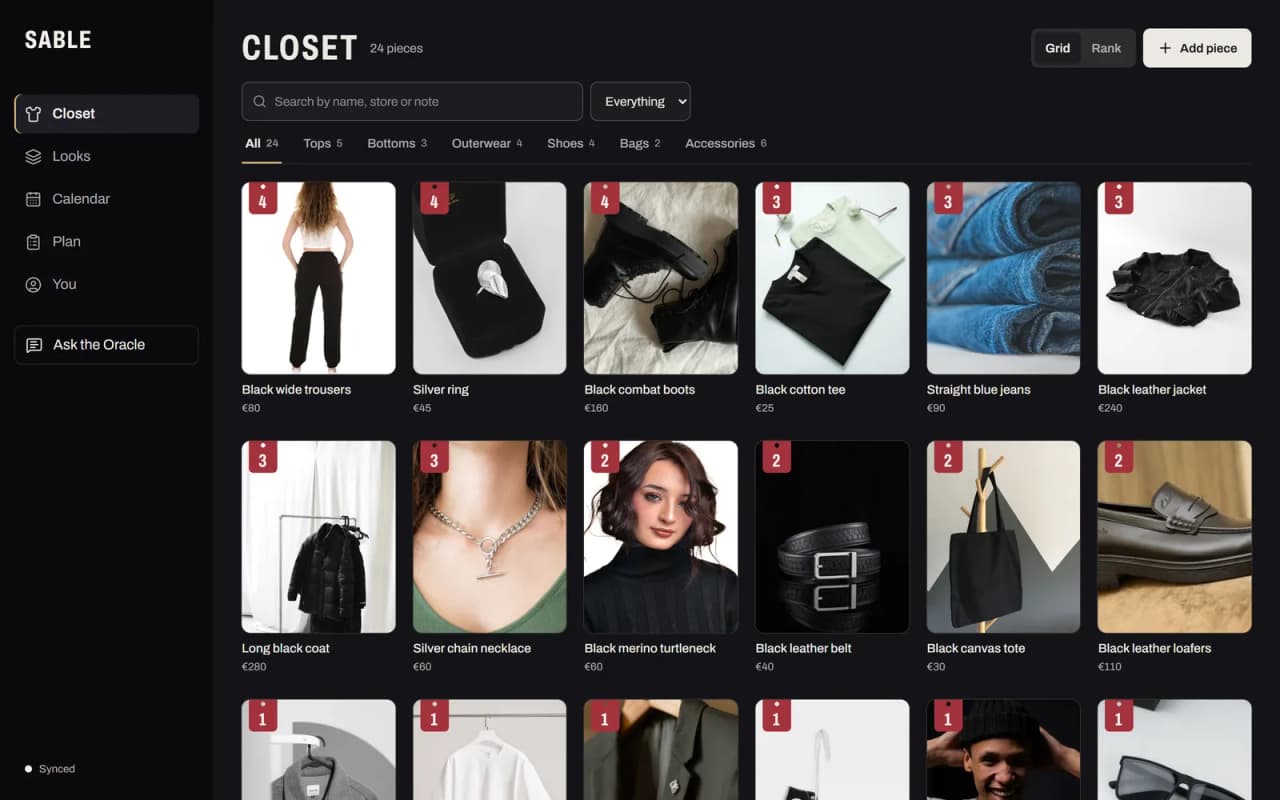
One number drives it: how many looks each piece opens, computed from your saved looks and never typed by hand. The Oracle, a Claude-backed stylist, works on your closet through the same operations as the app and reasons with that number when you ask what to buy next.

The same tools are served as a remote MCP server with sign-in, so Claude Desktop or Claude Code can read and update your closet directly.

You can try it without an account: open Sable and choose "Look around the demo closet first". Nothing you change in the demo is saved.

Kind
Personal product, open to sign-ups
Stack
TypeScript, React 19, Hono, Better Auth, Neon Postgres, Claude
Status
Private repo

MCP tools include

list_pieces
every owned, wished-for and planned piece
create_look
save a look from an agent
log_wear
record what you wore today
set_piece_status
mark a piece owned, wishlist or planned
update_memory
what the stylist remembers about you
Sable's closet: a grid of photographed pieces, each with a red tag showing how many looks it opens, from black wide trousers at 4 down
Closet: every piece tagged with how many looks it opens.
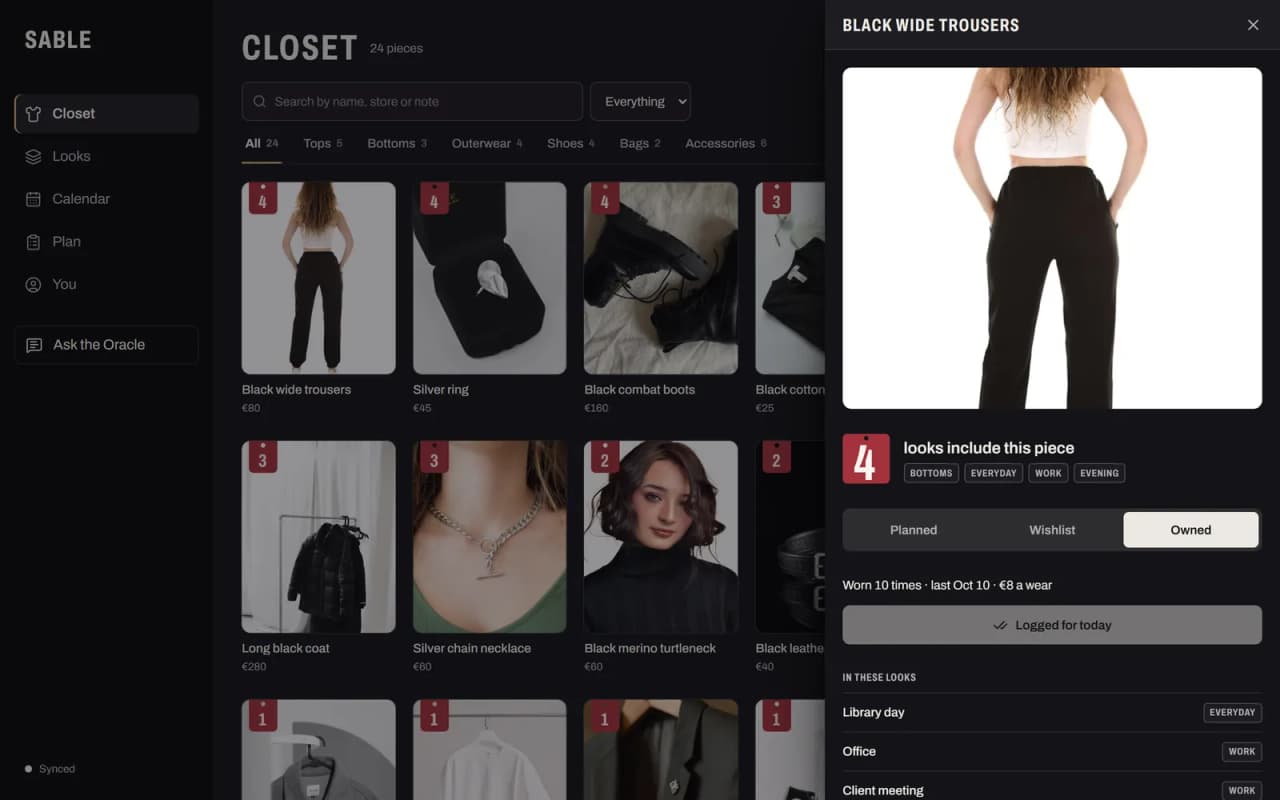
A piece opened in Sable: black wide trousers, 4 looks include it, marked owned, worn 10 times at 8 euros a wear, with the looks it appears in
A piece: the looks it is in, and what each wear has cost.
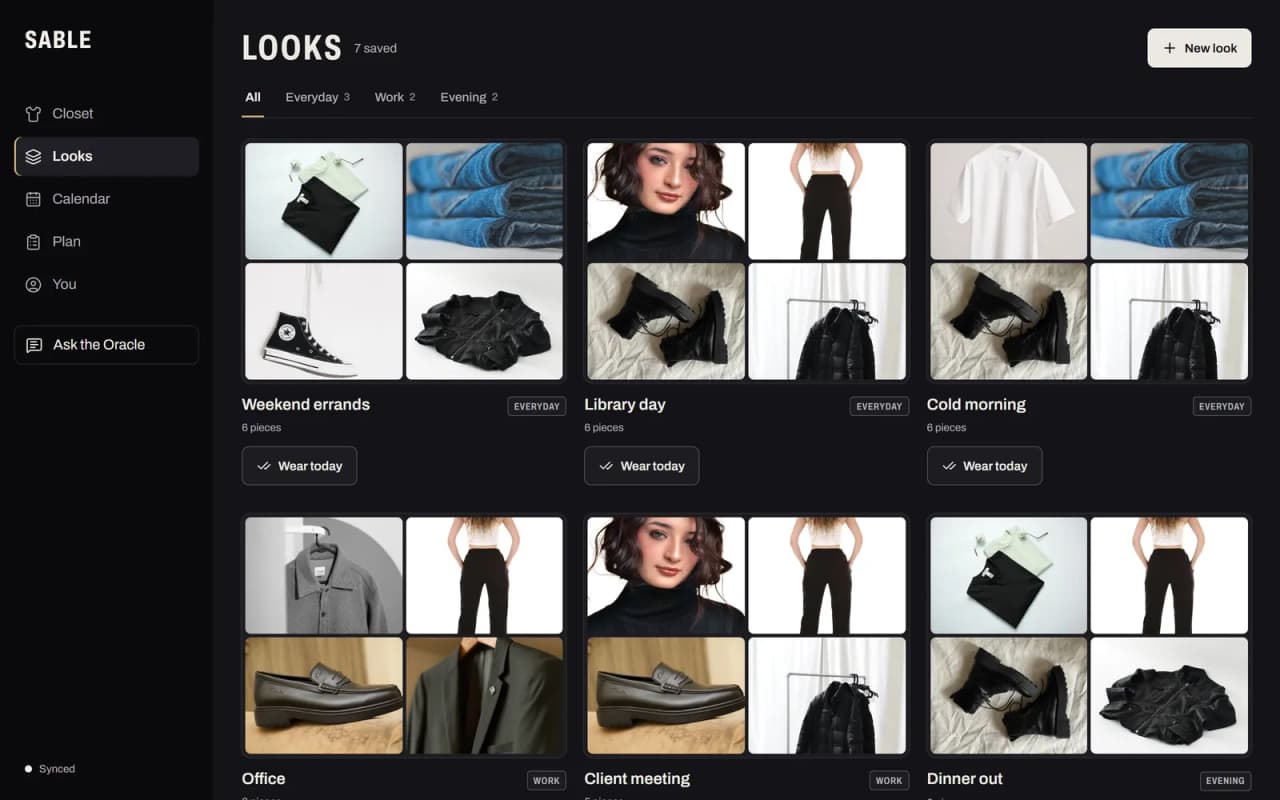
Sable's Looks page: saved outfits shown as four-photo collages, tagged Everyday, Work or Evening, each with a Wear today button
Looks: saved outfits, logged with one tap.

Earlier: games and tools

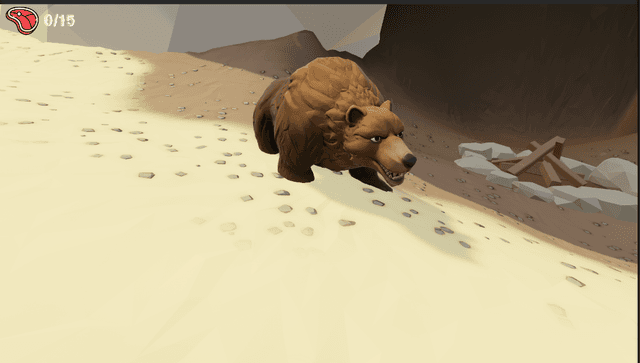
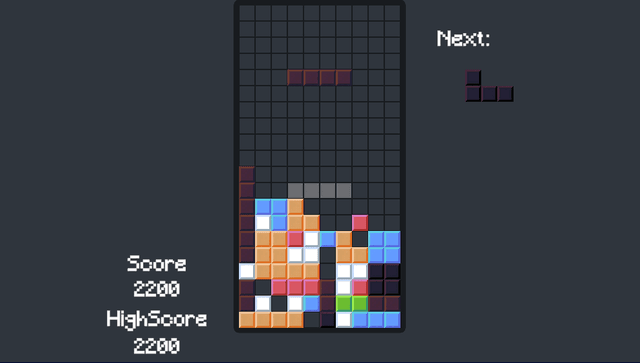
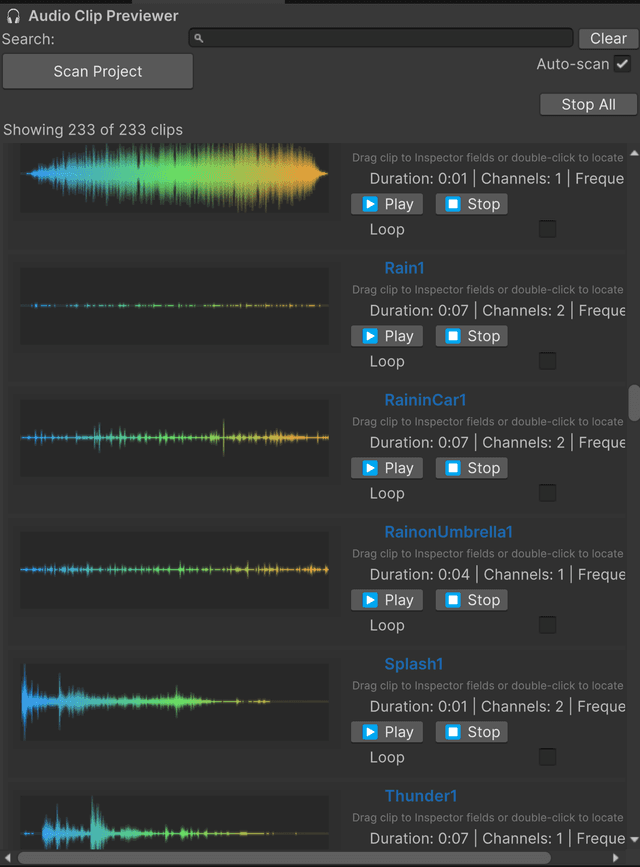
Where I learned to build systems: Unity, C#, enemy AI and editor tooling.

About

Beer de Vreeze, long brown hair and a black leather jacket

I'm Beer, a Junior AI Engineer at ASAPCLOUD in the Netherlands.

I studied Creative Software Development at Grafisch Lyceum Utrecht and built games in Unity and C#. Enemy AI and ML-Agents pulled me toward AI. An internship in ASAPCLOUD's Data & AI team, building MCP servers in TypeScript, turned into the job I have now.

Today I build agents, agent skills and the tools around them: day to day that means an AI harness, MCP servers and automations, and helping companies figure out where AI fits in their work. I judge an agent by whether it finishes real work, not by the demo. Outside work I scuba dive and make cocktails from scratch.